
MSR Reactor Hanging Kit: Thoughts on stoves in tents
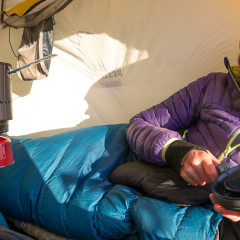
I recently bought the MSR Reactor Hanging Kit for my MSR Reactor Stove System and had an opportunity to test it out. At this point I guess I need to state that MSR recommends that you do not use their Reactor stove or the hanging kit inside the confines of a tent. For legal reasons I understand why they need to do this, it’s the same reason Q-tips needs to warn on their packaging “Do not insert in ear canal” which I’m pretty sure is the actual use of 90% of Q-tips. It is inherently dangerous and hazardous to operate a canister stove inside a tent. Not only could you melt the tent down around you, the stove is also pumping out carbon monoxide which could kill you. You are also making boiling water in an extremely cramped space, which, if knocked over, could severely scald bare skin. In saying all that, if you are smart, and can effectively mitigate those risks there are benefits to hanging a stove inside your tent. For myself I’d be interested in keeping my stove inside my tent when the weather is extremely bad outside, it’s the dead of winter and extremely cold, outside space is limited (camped on a ledge or ridge crest) or all of the above. The benefits of using the stove in this manner, in my opinion, are: Stove runs more efficiently due to less or no wind and by keeping the canister warmer. Less fuel is needed due to the previous benefit. Heat output by the stove is radiating into the tent raising the ambient temperature. Less body heat is being lost by having to operate the stove outside of the tent and outside of your sleeping bag. More appealing to hydrate. We tend to forget the human factor sometimes. I’ve made the bare minimum amount of water before because I wanted to spend more time in my sleeping bag and less time out in the cold. Making water, especially at higher elevations, can be a pain. Usually by the time you have to make water you are already exhausted and just want to lie down and rest. Being able to rest and have your water boiling makes it more appealing to hydrate more. The better hydrated you are the warmer you’ll be, the better you’ll sleep, the more energy you’ll have the next day… etc. If these benefits seem desirable then here is how I recommend mitigating the risks. Light the stove outside of the tent. Canister stoves can flare up when first ignited. You also don’t want to have a few misfires and fill your tent with gas which will combust when...
Julbo Tensing: Thoughts on Glacier Glasses
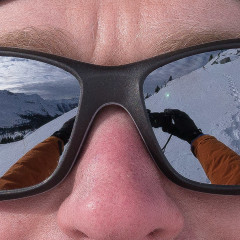
For the past decade I’ve worn Ray-Ban Aviators as my sunglasses of choice. I love them and for the longest time my eyes had never felt strained from sunlight while wearing them. This all changed when I started Mountaineering and hiking across glaciers and snowfields. For those that haven’t been high in the mountains on a sunny day in June in the middle of a glacier it is hard to describe the intensity of the brightness. The snow surface acts like billions of tiny mirrors reflecting the suns light at you from every angle. Without some kind of protection for your eyes you can go “snow blind” very quickly. The higher you go, the thinner the atmosphere which means more damaging UV radiation is hitting your skin. I’ve had my skin badly burnt high in the mountains even on a cloudy, dark day. Add together the increased UV radiation at higher elevations and the reflective nature of snow and ice and you have a cocktail which makes Sunlight just one the many additional dangers a Mountaineer needs to be aware of and protect against. I struggled through however, continuing to use my Aviators in the mountains for the past few years as I could get by without full eye protection, which in hindsight, was pretty stupid of me. My Ray-Bans filtered out most UV radiation hitting my eyes straight on but my eyes would feel strained from glancing rays coming under and through the sides of my glasses. The final straw that made me finally decide to retire my Ray-Bans from Glacier use was when I was climbing Mount Rainier last August. Above 4000m’s on the Ingraham Glacier in the midday sun I was experiencing the strongest UV radiation ever. Even with my Ray-Bans on I could barely let my eyes open a slit to see. After hours of this I had to cover my eyes to try and rest them whenever we’d stop for a break on our descent. I’d spent thousands making sure I had all the necessary equipment to protect my body on this huge mountain but neglected to think about spending less than a hundred bucks to protect my eyes. Once back to civilization I started looking online for Glacier Glasses. Julbo will almost always show up if you do a search yourself as they seem to be a market leader for this specific class of sunglasses. Ultimately, as the title suggests, I chose the Julbo Tensing. It had the right mix of functionality, weight, price (~$50) and aesthetics for my needs. Plus, the name Tensing also sold me a little. It’s an homage to Tenzing Norgay,...
Marmot Quasar Down Jacket Review
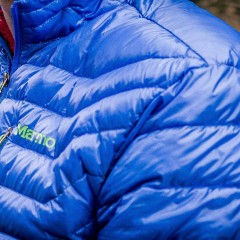
Recently I was in the market for a new insulating layer to add to my current layering system. I have a heavy Down Jacket by TNF, which is great for Winter use, but through the Summer and shoulder seasons, or even in the Winter when stopping for only a few minutes for a break, it’s mostly overkill. So for a lighter alternative, I narrowed it down to two choices; The Mountain Hardwear Ghost Whisperer Down Jacket and the Marmot Quasar Down Jacket. Obviously, I went with the latter. Price point ultimately decided it, as, specifications wise, they are pretty similar. You can find the jacket on Amazon: Marmot Men’s Quasar Jacket, Black, Medium. If I’d gone with the Ghost Whisperer I would have been paying an extra $2.60 for every extra gram of weight saved. Not worth it in my opinion. Since getting the jacket it’s been with me on nearly every trip into the mountains. I commented on a few of the noteworthy features in the video above, below I’ll mention a few of the jackets pros and cons that I’ve noticed so far. Pros: Super light, very warm: It almost feels like wearing nothing and I was skeptical as to how warm this would actually keep me. But, the 900 fill down and windproof Pertex fabric works wonders. It’s very warm and insulates excellently. Color: This is subjective, but I love the almost metallic finish to the color. In the Backcountry I purposefully choose garments that will stand out against the natural colors of the environment. This serves two purposes; one, they stand out better in photographs, two, if I ever needed to be found by SAR I want my clothes to make it easier for them. Durable fabric: I was wary about the super thin fabric used but I haven’t had to baby it at all. I’ve stuffed it in my pack with hard objects like snow probes and shovels and it hasn’t damaged it. The fabric also seems resistant to letting the down bleed out. I’ve noticed no bleeding so far. Compact: I could literally ball it up and make it almost fit inside my closed hand. It’s light enough and small enough that there is very little reason for me to ever not have this jacket in my pack. Cons: Fit: It’s long on the torso. I can understand this as being a benefit in some situations but in most it means the hem works its way below the hem of my waterproof hard shell allowing it to get wet. I usually have to keep the hem draw cords pulled tight to stop this from happening....
Into the Wild: the film, book and idea
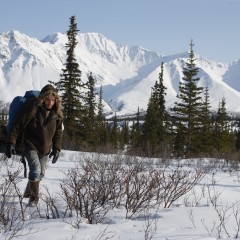
I understood what he was doing, that he had spent four years fulfilling the absurd and tedious duty of graduating from college and now he was emancipated from that world of abstraction, false security, parents, and material excess. ― Jon Krakauer, Into the Wild Will contain spoilers, you’ve been warned. Time changes a person. When I first watched “Into the wild” back in 2007 I was working in IT, playing video games in my spare time and trying to do as much as possible to remain stationary 7 days a week. I had no interest in the great outdoors and couldn’t understand individuals who did. So when I watched the film “Into the wild”, directed by Sean Penn and starring Emile Hirsch, I couldn’t believe that this individual had so selfishly ended his life. He’d ignorantly walked into the wild without training or proper equipment and died when an individual with even a modicum of sense wouldn’t have. It left me slightly angry that this story would even be worth writing about, let alone get turned into a movie. Fast forward to 2010. I moved from Ireland with my wife on a whim to seek out adventure in Canada. I didn’t know what awaited me there, I just needed to do something different. I guess spending most of my time motionless for so many years had left me feeling like my life was also standing still. I discovered the outdoors and embraced it. My perceptions changed steadily, almost, unnoticeably, so in 2012, while looking for a book to take out at the library (yes people still use those) I seen “Into the wild” by Jon Krakauer. Back in 2007, Krakauer was an unknown to me, but now, in 2012 he is someone I know a fair bit about due to our mutual love of mountaineering and high peaks. Truthfully, I hadn’t thought much about the story of Christopher McCandless since 2007. It was only upon seeing the book on the shelf by the same name that the memories of how angry I’d felt about that movie flooded back into my mind. It was like these were the memories of somebody else, somebody I no longer recognized. The person I am now does nothing but dream about the wild and being surrounded by it. I stare over at the hills and peaks that surround the town where I live and wish to go there always. I felt I needed to revisit this story again, to get a fresh perspective on it, so I rented out the book. I read through it pretty fast, which is unusual for me as I can take a year or more to read a short book. I...
Arc’teryx Alpha LT Jacket Review
“With my Mack and my Merry’s I’m ready to hike!” A silly phrase I coined 2 ½ years ago as I went on some of my first real hikes wearing what was, at the time, my hiking uniform; a North Face DWR Rain mack and a pair of Merrell Siren Song Mid Sport hikers (my “Merry’s”). You can see me sporting these very items in the picture above. The items have changed but the phrase still applies. I now own an Arc’teryx Alpha LT Goretex jacket (and a pair of La Sportiva Evo Nepal Mountaineering boots, but we will save those for another post) which has come to be one of my favorite pieces of gear. Weighing in under 12 ounces, it’s so lightweight that I pack it on every trip, summer or winter. Here are some of the features that I have come to appreciate since owning this jacket and using it in the mountains: - Provides full on weather protection. It keeps out moisture whether it’s rain or snow and works double duty as a windproof barrier for those, more often than not, windy summit days. I have used this jacket in conditions ranging from full on winter snow storm, summit camping, lashing rains of the NWP and dry blustery days. It’s the most essential piece of my layering system. -What’s with the location of the pockets? That’s what I first thought when I put it on, fresh off the hanger, in the warmth and comfort of my living room. But, get out on a glacier or on rock, put on a harness, backpack and all the other gak that goes along with this type of awesomeness, and you soon realize that the strategically placed reach-across pockets are the best thing that just happened to you. The easy access pockets make for great storage of your mobile phone, extra slings or any other items you need to keep handy but out of the way. - Helmet Compatible Hood. I can’t speak for everyone but unless you are feeling some serious frigid temperatures, I personally don’t like to wear a toque under my helmet as I tend to overheat pretty quickly and it’s a real hassle to have to take off your helmet and toque whenever you get too warm. Which is why I love this hood. It fits right over my climbing helmet with room to spare and cinches in at just the right spots for a nice snug fit (which by the way is great for when you’re not wearing your helmet as these adjustable cinch points on the hood keep it from blowing off...


