
The Amazing ACC Clubhouse in Canmore
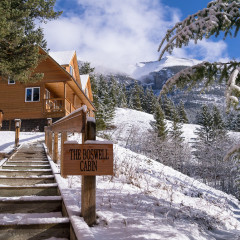
Bottom Line: The Alpine Club of Canada Clubhouse in Canmore is a hostel like no other we’ve ever seen. We almost don’t want to let the secret out about this place as we want to keep it to ourselves. But that wouldn’t be fair. If you are staying in Canmore for it’s access to adventures and want to immerse yourself in mountain culture then you simply have to book a stay at the ACC Clubhouse. Observations: We’d heard rumours on the grapevine of some well furnished, cozy cabins on the outskirts of Canmore filled with the positive vibes of mountain people featuring spectacular views of the surrounding mountains, for the low price of $36 a night ($25 for ACC members). We had to check it out! We’ve been members of the ACC and we’ve visited a few of the Cabins they maintain in the mountains on the West Coast. Something that always strikes us about them is how comfortable they are considering where they are located and how cheap they are to stay in. We’ve stayed in other Cabins in the mountains that are sometimes nothing more than a wooden garden shed, with shelves to lie on. Hey, when you are moving in the mountains you appreciate any kind of shelter you can get. The ACC Cabins that we’ve stayed in though have always gone above and beyond in providing facilities and comfort in really wild locations like high ridge crests or at isolated alpine lakes. We had a trip to the Rockies planned so we wanted to see what the ACC would offer at their Clubhouse in Canmore, which is near a large town, but still in a pretty wild location, located a few kilometres outside of town, nestled in the trees below Grotto Mountain. More than simply a Hostel. What I found did not dissappoint. I’ve stayed in “Hostels” in Europe and they can tend to have a bad name for being noisy, crowded and not relaxing. They are somewhere you crash after a night of partying. I did that through my 20’s and while affordable, I didn’t get much sleep there. Now in my 30’s I’m motivated to sleep well, get to bed early and get up and out before dawn to make use of the daylight in the mountains. The ACC Clubhouse is a different type of Hostel. It has shared rooms, eating areas and facilities but that’s where the similarities with the City Hostels I’ve stayed in ends. The feel is much more like the mountain cabins that I love to visit now. The views from almost every window are breath taking and inspiring....
10 Things My First Ultra Taught Me
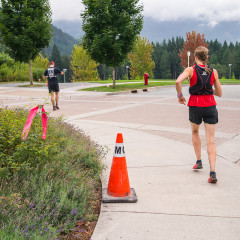
Technically anything over the marathon distance of 42.2 km (26.2 miles) is classified as an ultra distance. With this in mind it means I officially ran my first ultra trail race in August 2013, when I ran the Squamish 50 50 km (31 miles) trail race. However, it wasn’t until I decided to run my first 80 km (50 mile) trail race that it actually felt like I was entering the ultra arena. This felt monumental and to be honest a little outside of my wheelhouse. But I was committed to running it, not just surviving it, and I tried to focus hard on training. Seeing as I am not a professional and fairly new to the trail running scene, my approach to training, although a little more refined recently, could be called somewhat clumsy and haphazard. I have several sports/hobbies that I like to pursue - rock climbing, mountaineering, ice climbing,skiing - so my attention and energy can be diverted easily. Because of this my training became a bit of a juggling act. I ended up learning a lot while training and running my first ultra. Here are the top 10 things I learned during the process: 1) Run a lot of hills - Yes this means hill repeats. BORING! That’s probably what you are thinking and I know because I thought the exact same thing. In fact I remember one elite trail runner say that you know are deep into training season when you have a fair share of boring runs. Yes, not every run is going to be about having fun but about pushing you outside of your comfort zone. Besides if you are anything like me, slightly masochistic as most long distance runners are, you will find joy in these training runs too! 2) Run back to back long runs -The LSD (long slow distance) is the trademark of endurance runners. Spending a lot of time on your feet, not worrying so much about the actual distance covered, but about the hours you spend out there. So run a big 6-8 hour run on Saturday and get ready to run at least another 2-4 hours on Sunday. Let your body know your mind is in control and you are running whether the body protests or not; run on tired legs. 3) Eat a lot while running, even when you don’t want to - I learned this when I let a podium finish slip through my fingers because I didn’t focus on getting calories into my body early on in the race. It was only when my friend, who was keeping pace with me that day,...
Tears on Mount Harvey
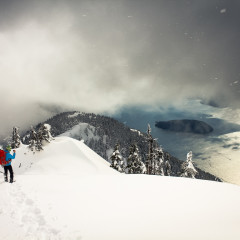
A few weeks ago we did a popular North Shore hike that we had previously done for the first time in 2011, Mount Harvey. It has spectacular scenery, on one side of the ridge the Pacific ocean with a chain of islands stretching out as far as the eye can see , and on the other side a sea of beautiful coastal mountains with no end in sight. But it wasn’t just the fantastic scenery that had me reminiscing on this trip. This years summit shot! View of the Lions Stealthy selfie The first time I hiked Mount Harvey I was training for my first road marathon. I was following a strict 5 day a week running plan and feeling the effects on my body and mind. I was feeling overwhelmed with the training and the physical toll it was taking on my body. It was important to me to still be able to train for the marathon and to also be able to spend time in the mountains, so I felt the need to always be pushing myself. That day in April 2011 proved to be the breaking point for me. The day prior to the hike I had run an 18km training run, which at the time was a long distance for me. I felt tired starting the hike, but felt pretty good, until we started the uphill section. I slowed down to a snails pace and Leigh shot past me, making his way up the hill. Looking up the steep incline,allowing the tiredness to weigh so heavy on my mind and body and watching Leigh move in a seemingly effortless way up the hill, proved to be too much. I stopped in my tracks overcome with frustration and feelings of not being able to continue. At that moment I felt so tired, so heavy with emotion that I could barely breathe. Leaning on a tree, out of sight of Leigh, I started to sob. I felt useless, exhausted and irritated with myself and my physical limitations. Feeling pretty sorry for myself, I said to myself, between sobbing breaths,“I can’t do this” “I’m too tired”. Taking in the view The smile before the meltdown Up, up and up It lasted a few minutes before I had to tell myself that no one feels sorry for me but me. I chose this and I can’t expect anyone to have sympathy for me. In my own words of tough love I needed to “suck it up buttercup”. So in that moment I had to make a decision, I wiped the tears from my eyes, composed myself and headed up towards...
The Curse of West Coast Living
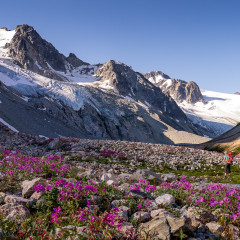
Ok so it’s not so much a curse as a stress. But let me be clear that there is good stress and bad stress. You know like worrying you won’t have the money to pay rent for the month, that would be a bad stress. The stress I am talking about is GOOD stress. The kind of stress that puts a constant pressure on you to make the most of your time. Living in a temperate climate like the West Coast breeds this type of good stress. The weather is pretty mild all of the time, especially in comparison to other parts of the country, mostly when it comes to a typical Canadian winter. Now don’t get me wrong living on the West Coast comes with it’s own set of weather difficulties, like torrential rain that lasts for weeks which can then lead to puddles on the trail that are ready to swallow a human whole. Oh and we even get frost in the mornings and a few times a year we may even get a dump of snow. But I am going to go out on a limb here and say that my chilly brethren in other parts of the country may have it slightly tougher than we do. They do, after all, have to put up with bone crushing cold and hurricane force blizzards. At least they have a good excuse to stay inside, when they choose to do so. Me, well I don’t really have any excuse. I live in a part of the country that affords me good weather most of the year. My only excuse for not getting out would be my own laziness. And as laziness is a quality that I very much detest, I don’t want to fall prey to it’s charm. I mean come on I really only have to deal with rain, umm pretty harmless water droplets falling from the sky, and perhaps having to splash through water which will in turn splash onto my shoes…GASP!! So I end up with wet feet and muddy pants…that seems pretty mild compared to frozen noses and frost-bitten toes and fingers. So for now, living on the West Coast, makes me stressed. Stressed to make the most the every single moment I can, because I don’t have any valid excuses. All I can do is tip my hat to my much hardier neighbors who deal with REAL Canadian weather and go grab my running shoes because I’m not going to let a forecast for rain this weekend stop me from getting out! If you happen to read this and are in fact one of the hardier...
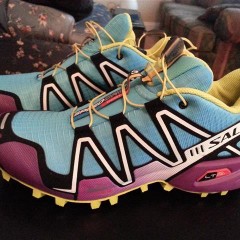
Salomon Speedcross 3 Trailrunner Review
Bottom Line: These runners were extremely comfortable right out of the box. I didn’t encounter the usual “breaking in” period that I have experienced with other running shoes. They are a fairly lightweight trail runner with a burly cleated tread which is great for technical trails and all-weather conditions. I have found that the tread wears out fairly quickly on Salomon shoes, but overall they are such a comfortable trail runner that I highly recommend them. How I chose it: I had owned Salomon trails runners previously, before I was doing any serious trail running, and loved them as an all around walking/hiking shoe. I also had a few trail running friends that highly recommended the Speedcross. Observations since using it: The lacing system is excellent. Unlike traditional style laces the Kevlar Quick-Fit system works with one pull and won’t loosen. There is even a handy tongue pocket to tuck away the laces, which I personally love as it keeps things from flapping around. It is a one-time tighten before you leave the house and you are good to go for hours. When I ran my first 50km trail race last year I used the Salomon Speedcross and I didn’t have to adjust them once in the 8 hours I was out on the trails. There was no breaking in period required for these shoes. I took them out of the box and went for a run without any issues with rubbing or blisters. They are as close as feeling liking like a slipper as a trail runner could. The fit is very precise. I have narrow feet and find that once I tighten the shoe it molds nicely to my foot which makes for a secure fit, making for more confident footfalls when running on technical trail. The toe box provides enough room to not cause issues with any rubbing or pressure points, which also helps to delay the onset of black toe nails. There is an 11mm drop in this shoe, which is simply the difference between the height of the heel and the height of the toe when standing; zero is the equivalent to standing barefoot. So there is a pretty substantial drop in these shoes which is more akin to a traditional running shoe and will support people who are heel strikers. I personally mid-foot strike, but haven’t found these shoes to cause me any issues. Pros: Lacing - Excellent lacing system with tongue pocket to keep lace ends out-of-the-way. Comfort - Super comfortable from date of purchase. Fit - Secure, precise fit due to locking lacing system and the mold of the shoe. I feel...


