
Sunwolf Cabins Review
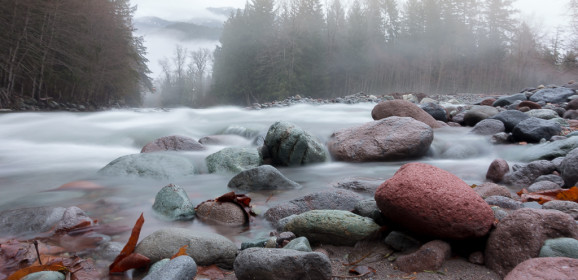
Bottom Line There are fewer things better than staying in a cozy cabin tucked away in the forest, somewhere you can disconnect and unplug from the outside world. We found this when we stayed at Sunwolf Cabins. Only a few minutes down the Squamish Valley Road, the Sunwolf cabins are nestled in the trees right along the banks of the Cheakamus River. Even with it’s close proximity to Squamish and Brackendale, as soon as you drive in you feel like this is the perfect place to unwind and connect with nature. Our Experience We had the opportunity to stay in the Logger’s Shack early this December. A beautiful, newly renovated 550 square foot cabin. It had all the modern conveniences you need but it was still kept rustic enough to feel set apart from everyday life. There were no screens to be found in the cabin, but plenty of windows to look out at the trees and a wood burning stove that kept the cabin toasty warm. I don’t know about you but the coziness of a location is tripled when there is loft, which is where the main bed was in this cabin. Tucked in the A-Frame roof, it isn’t quite standing room, but it’s enough room to sit and curl up in one of the softest most comfortable beds we have slept in. There is another pull out bed downstairs so the cabin can comfortably sleep 4 people. There was a fully equipped kitchen so we were able to cook our own dinner and brew up a cup of coffee to sit by the fire and listen to the rain falling outside. When the rain decided to break we took advantage of the open grounds to go rambling in the mossy forest and go sit by the river. It was quiet and secluded, it felt more like we were staying at a retreat; somewhere we could really rest and relax. What They Offer Being at Sunwolf for us was about slowing down, adjusting our pace so that we could just be in the surroundings. It helps that they have an on site cafe, called Fergie’s, that serves the most delicious brunch around, so there is no need to get up too early to grab breakfast. They even have guided river rafting and eagle float trips, depending on the season. We took one of their winter Eagle Float Trips and have to say it was one of the most spectacular ways to see eagles. Within one hour we spotted over 200 and that doesn’t even include the other 13 varieties of birds we saw. For a fully detailed review...
LifeStraw Review
Adventuring in the mountains, running on the trails or travelling to new countries has something in common - the need for clean pure drinking water. Hydration is often something we can take for granted in the western world where we have access to clean drinking water from practically every faucet. However, if you are someone who frequents wild places whether in the mountains, forests or travels to countries where clean water is not readily accessible, the need for clean drinking water becomes a main focus…boiling, filtering or buying bottled water is a must. This often takes considerable time and effort. What if there was a quick and easy way to filter water on the go? We have recently had the opportunity to test out the Vestergaard LifeStraw & LifeStraw Go from Eartheasy. It has changed the way we think about filtering water and significantly increased our ability to hydrate on the go no matter where we are. LifeStraw A convenient straw style filter that is easy to pack and designed for use on the go. Stats: 2 ounces. 9” long x 1” diameter. BPA free, contains no chemicals. Filters out 99.9999% of waterborne bacteria, including E.coli and 99.9% of waterborne protozoa, including Giardia & Cryptosporidium. It also reduces turbidity, filtering down to 0.2 microns, which makes it great for glacial melt water. Filters up to 1000 liters. No aftertaste. Lifestraw does not use iodine. Perfect for an emergency preparedness kit. Due to it’s small compact size we have brought this with us hiking and it is always in our trail running packs. When we know we will be passing by a small stream, tarn or lake we take the opportunity to drink right then and there. It saves us having to stop and re-filter or boil water to fill our water bladders. Being able to pull out the Lifestraw at any given moment to take a few sips of water from a natural water source, safely, without a second thought, is definitely reassuring. Pros: Lightweight Compact Ability to drink from the source Cons: With water sources at ground level it can require a bit of effort to get low enough to use the straw. LifeStraw Go A refillable water bottle with a Lifestraw filter that enables you to take safe drinking water with you wherever you go. Stats: 5.9 oz (168 grams). 9.25” long x 3.14” diameter. BPA free, contains no chemicals. Flip top bite valve and carabiner for attaching to your backpack. 22 ounce volume (0.65 liters). Filters up to 1000 liters. Filters out 99.9999% of waterborne bacteria, including E.coli and 99.9% of waterborne protozoa, including Giardia &...
Hornby Island Energy Bars Review
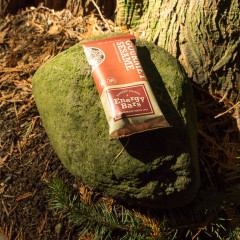
Delicious, natural and healthy snacks for mountain adventures is something we are always on the lookout for. Long days in the mountains require a lot of calories and what you’re eating has to taste good to encourage you to keep eating. We have recently discovered the deliciousness of Hornby Island Energy Bars and need to let you know that this may just be your new favourite snack bar for adventures! They are made with simple natural ingredients that you can easily pronounce, so none of that chemical mumbo jumbo, they taste amazing and are made locally right on Hornby Island in British Columbia. Currently they have 4 scrumptious flavours. Here is a quick breakdown of the four bars and which ones are our personal favourites: Tahini This is my personal favourite! Made with ingredients like oats,dark chocolate, sesame tahini and coconut it is the highest calorie bar in their lineup with an impressive 420 calories and 11 grams of protein for an 85 gr bar. This bar will give you enough energy to keep hiking or climbing for hours! Carob Made with ingredients like oats, peanut butter, coconut and carob. Never tried carob? Then you are in for a treat. Try this bar and see if you can tell it’s chocolate free, the carob will leave you pleasantly surprised. At 375 calories and 11 grams of protein it’s a tasty choice. Sesame You don’t live and die for chocolate? I know there are a few of us out there so this bar is for you. Made with ingredients like oats, peanut butter, molasses and sesame seeds this is a delicious mix with 364 calories and 13 grams of protein. Gourmet Sesame This is Leigh’s favourite. It’s the Sesame bar with a little extra decadence added in the form of dark chocolate. Made with ingredients like oats, peanut butter, molasses, sesame seeds and dark chocolate this gourmet version is 385 calories and 13 grams of protein. A few things to note is that these bars, except for the Tahini, are not nut allergy friendly as they all contain peanut butter. They are also very calorie dense bars so are best consumed during high activity - hiking, climbing, trail running and probably not as snack bars for daily use. We now put a Hornby Island Energy bar in every backpack ready to keep us energized for every adventure. If you haven’t tried them before we highly recommend them…and when you do let us know what your favourite flavour is! We would like to say a big THANK YOU to Hornby Island Energy Bars for the opportunity to test out their product and give our...
The Wonderland Valley Resort and Campground
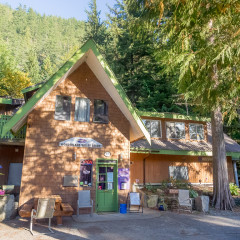
Bottom Line: The Wonderland Valley Resort and Campground is a hidden gem for staying overnight in Squamish. Situated in an amazing location in the trees, with moss covered cliffs beside it, a babbling brook running through it and a secret viewpoint to watch sunsets on the impressive Stawamus Chief and beyond. The amenities are generous with fast Wifi (tested at 50Mb/s download during our stay), laundry facilities onsite for washing and drying and clean washrooms. We found the showers always had hot water and the pressure was always high. Loved it! First Impressions: Hidden in the forest just north of Squamish near Brackendale is the Wonderland Valley Resort and Campground. As you leave Squamish heading towards Whistler it is on the right at the intersection of Highway 99 with Depot Road East. This intersection is known locally as “The Yellow House Intersection” due to the large yellow house on the right as you drive north. Turn right here and head along the road into the forest, following the wonderfully designed purple and gold signs for Wonderland. As we entered the grounds for the first time we realized that this was not an RV park like any other we’d seen before. It was colourful, vibrant and charming. We checked in and went about getting our trailer, an old Boler camper, hooked up to power and water. We picked a spot beside a flowing creek for those soothing babbling sounds that would lull us to sleep every night. The trees above rustled with the wind casting speckled sunshine across the forest floor. This place was indeed Wonderland. The Wonderland name originates from this Resorts location next to Alice Lake, referring to the story of “Alice in Wonderland”. Alice Lake can be reached from the grounds on foot or mountain bike by using the “Wonderland” trail. A lot of the trails nearby have been given “Alice in Wonderland” themed names also. Even though we were only a few minutes drive from Squamish we felt like we were out in the wild. Wonderland Valley Resort and Campground has done an excellent job of preserving the natural experience to their grounds. In the evenings be sure to check out the Water Tower Viewpoint that offers amazing views of the sun setting over the Stawamus Chief mountain and the town of Squamish. It will take your breathe away. More than just a Campground: Not only can you camp out in a tent here, they also have service for both 15 amp and 30 amp Campers and RV’s with water, electrical and sewer hook ups as well as a Hotel with views out above the trees into...
10 Reasons To Run Squamish 50 Every Year
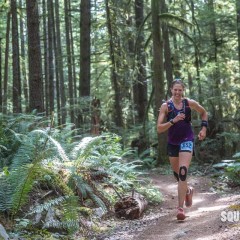
This year made my 3rd year in a row running a distance in the Squamish 50 series. My love affair with the Squamish 50 began when I signed up for my first trail race, the 50km option, in 2013. The following year would see me attempting and finishing my first 50 miler and this year I chose the 50km option once again. What exactly is it about this race that keeps me coming back for more? Here are 10 of my favourite things about this race and reasons why you should put this race on your yearly schedule. 1.Finish line hugs. The race director, Gary Robbins, actually waits at the finish line both days to congratulate every single runner that comes across the finish line with a hug (he might even let you tousle that glorious beard, if that’s your kind of thing). Don’t be surprised either if random runners are coming up to you to hug you, high five and give you a job well done. There is just a lot of love going around at the finish line of this race! 2. Singletrack trail for miles upon miles. The course has been designed to contain at least 85% beautiful forest singletrack.This is trail running at it’s best! 3. Running in a rainforest. That’s right, this isn’t just any forest we are running through. This is Pacific Northwest Rain Forest which means there are giant cedar and hemlock trees, ferns filling the forest floor and moss a colour of green you wouldn’t believe. It’s vibrant, it’s humid and the air is filled with the scent of wet earth and vegetation. 4. Bouncing across wooden mountain bike bridges. Did you know that almost all of the trails in Squamish have generously been created by the SORCA (Squamish Off Road Cycling Association) mountain biking community and do you know what mountain bikers love? Wooden bridges! Funny because trail runners love them too. The short ones curve steeply requiring you to pay extra attention to your footing and the longer ones bounce with each step which means the bridge rises up to meet your foot at each placement. 5. Salty potatoes. This might not sound like a big deal or even that tasty. But run 23 km (14 miles), 50 km (31 miles) or 80 km (50 miles) on a warm August day and tell me that the starchy, salty, melt in your mouth potato doesn’t hit the right spot. 6. High fives everywhere. I like to think that trail runners are a different breed of runner. They are friendlier, more excitable and more willing to have a chat on the trail....
Prepare for the Salomon Valley to Peak Race in Whistler
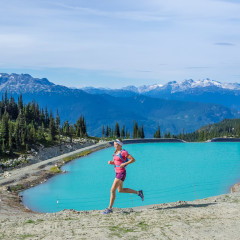
On September 5th, 2015, British Columbia, Canada is going be introduced to a trail race that’s a completely different kind of animal. It’s famously said “the Summit is only the half-way point“, but what if it didn’t have to be? What if the summit was the end? Salomon has created this in Whistler with the Salomon Valley to Peak trail running race, a 23km/14.3M long run that gains over 1609m’s/5280ft from the Valley floor to the very top of Whistler Peak. To put that elevation another way, it’s almost exactly like climbing a vertical mile into the sky. This is going to be intense and epic! Here’s some of my tips on how to prepare yourself for a feat like this. The Secret to Running up Mountains What’s the secret to training for an uphill race like Salomon Valley to Peak? The secret is that there is no secret at all. You just need to put in the miles, get breathless and learn to love feeling a little uncomfortable. There are a few top tips though that can definitely help you to get the most out of race day and really have fun out there. Run Hills Let’s be honest, running uphill is hard work, but it is what makes you a stronger runner. Think of running uphill in terms of perceived effort rather than pace. What this means is that you won’t be trying to run up the hill at the same pace that you can run on flat trail, instead slow your pace down to a point that allows you continue running at a regulated heart rate. If you push uphill too fast your heart rate will spike, that’s just something you won’t be able to maintain for long. Learn to power hike/walk Yes you read that right, walking is definitely allowed! This isn’t your everyday walking pace though. This is a hiking pace with a bit of oomph behind it. It’s all about power and stride. If the hill is too steep or sustained for you to continue running, oftentimes it is more efficient to power up those hills in hiking mode. When you are out training on your long hills, throw some power hiking into your routine with emphasis on the power. Pump your arms, straighten your back and take short steps to ensure you are using the big glute muscles to propel you up the hill. Run Technical Trail Trail running often involves technical terrain, roots, rocks and twisty trail, and the Salomon Valley to Peak race is no different. Be prepared for this type of trail by training on it. Practice running up and...


