
Blog Feed
Sunwolf Cabins Review
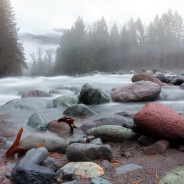
Bottom Line There are fewer things better than staying in a cozy cabin tucked away in the forest, somewhere you can disconnect and unplug from the outside world. We found this when we stayed at Sunwolf Cabins. Only a few minutes down the Squamish Valley Road, the Sunwolf cabins are nestled in the trees right along the banks of the Cheakamus River. Even with it’s close proximity to Squamish and Brackendale, as soon as you drive in you feel like this is the perfect place to unwind and connect with nature. Our Experience We had the opportunity to stay in the Logger’s Shack early this December. A beautiful, newly renovated 550 square foot cabin. It had all the modern conveniences you need but it was still kept rustic enough to feel set apart from everyday life. There were no screens to be found in the cabin, but plenty of windows to look out at the trees and a wood burning stove that kept the cabin toasty warm. I don’t know about you but the coziness of a location is tripled when there is loft, which is where the main bed was in this cabin. Tucked in the A-Frame roof, it isn’t quite standing room, but it’s enough room to sit and curl up in one of the softest most comfortable beds we have slept in. There is another pull out bed downstairs so the cabin can comfortably sleep 4 people. There was a fully equipped kitchen so we were able to cook our own dinner and brew up a cup of coffee to sit by the fire and listen to the rain falling outside. When the rain decided to break we took advantage of the open grounds to go rambling in the mossy forest and go sit by the river. It was quiet and secluded, it felt more like we were staying at a retreat; somewhere we could really rest and relax. What They Offer Being at Sunwolf for us was about slowing down, adjusting our pace so that we could just be in the surroundings. It helps that they have an on site cafe, called Fergie’s, that serves the most delicious brunch around, so there is no need to get up too early to grab breakfast. They even have guided river rafting and eagle float trips, depending on the season. We took one of their winter Eagle Float Trips and have to say it was one of the most spectacular ways to see eagles. Within one hour we spotted over 200 and that doesn’t even include the other 13 varieties of birds we saw. For a fully detailed review of this trip check out our post on the Hello BC Blog here. There is even an open air hot tub near the guest lodge that is free for all guests to use. We took a soak at night while it was peppering rain and let the day melt away. For all of you pet parents out there you will be happy to know that Sunwolf if pet friendly, so you don’t have to worry about leaving your pooch at home. When to Go Summer or Winter will give you a completely different experience at Sunwolf. We got to experience the wintry side of Sunwolf and can definitely recommend it....
read moreLifeStraw Review
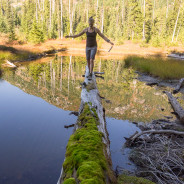
Adventuring in the mountains, running on the trails or travelling to new countries has something in common - the need for clean pure drinking water. Hydration is often something we can take for granted in the western world where we have access to clean drinking water from practically every faucet. However, if you are someone who frequents wild places whether in the mountains, forests or travels to countries where clean water is not readily accessible, the need for clean drinking water becomes a main focus…boiling, filtering or buying bottled water is a must. This often takes considerable time and effort. What if there was a quick and easy way to filter water on the go? We have recently had the opportunity to test out the Vestergaard LifeStraw & LifeStraw Go from Eartheasy. It has changed the way we think about filtering water and significantly increased our ability to hydrate on the go no matter where we are. LifeStraw A convenient straw style filter that is easy to pack and designed for use on the go. Stats: 2 ounces. 9” long x 1” diameter. BPA free, contains no chemicals. Filters out 99.9999% of waterborne bacteria, including E.coli and 99.9% of waterborne protozoa, including Giardia & Cryptosporidium. It also reduces turbidity, filtering down to 0.2 microns, which makes it great for glacial melt water. Filters up to 1000 liters. No aftertaste. Lifestraw does not use iodine. Perfect for an emergency preparedness kit. Due to it’s small compact size we have brought this with us hiking and it is always in our trail running packs. When we know we will be passing by a small stream, tarn or lake we take the opportunity to drink right then and there. It saves us having to stop and re-filter or boil water to fill our water bladders. Being able to pull out the Lifestraw at any given moment to take a few sips of water from a natural water source, safely, without a second thought, is definitely reassuring. Pros: Lightweight Compact Ability to drink from the source Cons: With water sources at ground level it can require a bit of effort to get low enough to use the straw. LifeStraw Go A refillable water bottle with a Lifestraw filter that enables you to take safe drinking water with you wherever you go. Stats: 5.9 oz (168 grams). 9.25” long x 3.14” diameter. BPA free, contains no chemicals. Flip top bite valve and carabiner for attaching to your backpack. 22 ounce volume (0.65 liters). Filters up to 1000 liters. Filters out 99.9999% of waterborne bacteria, including E.coli and 99.9% of waterborne protozoa, including Giardia & Cryptosporidium. It also reduces turbidity, filtering down to 0.2 microns, which makes it great for glacial melt water. No aftertaste. Lifestraw does not use iodine. Perfect for an emergency preparedness kit. This is a bottle we have found useful everyday. Whether we are backpacking or simply travelling we can be sure we are drinking the cleanest water possible. Fill it up at the next available water source - lake, stream or puddle and you will have water that is clean and safe to drink. It would be especially convenient when travelling to and from other countries, when you can’t always be confident of the local water source. Pros: Lightweight compared...
read moreHornby Island Energy Bars Review
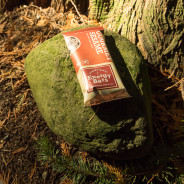
Delicious, natural and healthy snacks for mountain adventures is something we are always on the lookout for. Long days in the mountains require a lot of calories and what you’re eating has to taste good to encourage you to keep eating. We have recently discovered the deliciousness of Hornby Island Energy Bars and need to let you know that this may just be your new favourite snack bar for adventures! They are made with simple natural ingredients that you can easily pronounce, so none of that chemical mumbo jumbo, they taste amazing and are made locally right on Hornby Island in British Columbia. Currently they have 4 scrumptious flavours. Here is a quick breakdown of the four bars and which ones are our personal favourites: Tahini This is my personal favourite! Made with ingredients like oats,dark chocolate, sesame tahini and coconut it is the highest calorie bar in their lineup with an impressive 420 calories and 11 grams of protein for an 85 gr bar. This bar will give you enough energy to keep hiking or climbing for hours! Carob Made with ingredients like oats, peanut butter, coconut and carob. Never tried carob? Then you are in for a treat. Try this bar and see if you can tell it’s chocolate free, the carob will leave you pleasantly surprised. At 375 calories and 11 grams of protein it’s a tasty choice. Sesame You don’t live and die for chocolate? I know there are a few of us out there so this bar is for you. Made with ingredients like oats, peanut butter, molasses and sesame seeds this is a delicious mix with 364 calories and 13 grams of protein. Gourmet Sesame This is Leigh’s favourite. It’s the Sesame bar with a little extra decadence added in the form of dark chocolate. Made with ingredients like oats, peanut butter, molasses, sesame seeds and dark chocolate this gourmet version is 385 calories and 13 grams of protein. A few things to note is that these bars, except for the Tahini, are not nut allergy friendly as they all contain peanut butter. They are also very calorie dense bars so are best consumed during high activity - hiking, climbing, trail running and probably not as snack bars for daily use. We now put a Hornby Island Energy bar in every backpack ready to keep us energized for every adventure. If you haven’t tried them before we highly recommend them…and when you do let us know what your favourite flavour is! We would like to say a big THANK YOU to Hornby Island Energy Bars for the opportunity to test out their product and give our honest...
read moreRevelstoke Mountain Resort Skiing
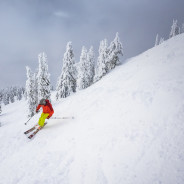
Bottomline: Revelstoke Mountain Resort should be high on your list if you want powder snow and a Ski Resort that caters to the modern powder-hungry skier/snowboarder. The resort boasts the longest vertical in North America (i.e. 1,713 metres/ 5,620 feet) and averages around 9-14 metres of powder snow per season! Getting There: Revelstoke BC is around 200km away from Kelowna International Airport, the resort is a further 6km outside of the town of Revelstoke. There are airport shuttles between Kelowna and Revelstoke, and there are shuttles between the town of Revelstoke and Revelstoke Mountain Resort. I drove directly to Revelstoke Mountain Resort but used the shuttle to the town regularly. Observations: Before I’d ever set foot in Revelstoke I’d heard skiers and snowboarders talk of legends about the snow there. The over-the-head face shots of blower pow, unlike any they’d seen before. This was long before I knew how to ski or knew what any of that meant but I could tell from their goggle-tanned expression of enthusiasm that it must be a good thing. I’ve only personally learned to ski in the past few years so when I read online that Revelstoke Mountain Resort has very little beginner terrain I was a little anxious about what to expect. The difficulty in terrain is generally split like this: 7% Beginner, 45% Intermediate, 48% Advanced. Terrain for all experience levels: But once out in the resort my fears were soon quelled. The intermediate terrain does not feel too difficult and the sheer amount of new snow on the ground will usually make even steeper runs feel forgiving. The actual ski resort at Revelstoke is pretty new, opening for it’s first season at the end of 2007, but it has all the hallmarks of a location that will become the premier ski/snowboard resort of Canada. We stayed at the Sutton Place Hotel in a suite during our visit which was amazing. After a long day of skiing we could ski right back to our Hotel, drop off our skis and head straight for the hot tub to unwind our muscles and get them ready for our next day skiing on the mountain. A view of our Suite The bedroom. Luxury! Our stay was only a few days long so it felt almost like a whistle stop. More fresh snow was in the forecast and it was a hard decision to pack up and move on. The snow was everything we expected and the terrain on the mountain exceeded our expectations. The resort hasn’t been carved into big long wide ski runs that simply go from top to bottom. They curve and narrow and widen and offer abundant options for splitting off into the trees. It’s fun to ski here, a lot of fun! We particularly liked the glade skiing from the top of “The Stoke” Chair, we could have spent a week skiing different variations in this area alone. Conclusion: Great skiing, facilities for everyone from families with small children to expert skiers looking to rip long lines of powder. The resort area has everything you need right there at the base of the mountain, but if you are looking to check out the town of Revelstoke then definitely do, it has many interesting eateries offering up delicious food. Overall a highly enjoyable visit and it...
read moreThe Conrad Kain Hut in the Bugaboos
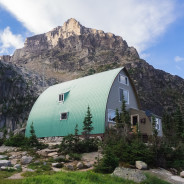
Bottom Line: A modern and comfortable cabin in the wild and rugged Bugaboos of the Purcell Mountains. Amenities include running water, stoves, electric lighting, heating and wall outlets. None of those conveniences can compare though with the views of rock spires and rumbling glaciers that surround this Hut. They simply need to be seen to be believed. You will be amazed that you can stay in this place for only CA$25 per night! Observations: The Bugaboos in the Purcell Mountains near Golden, BC have long been famous among Mountaineers as a destination to experience some of the finest alpine climbing available in the world. But a stay at the Conrad Kain Hut needn’t just be a base camp for climbers alone. Indeed, on our visit we rubbed shoulders with trail runners, day hikers, backpackers, photographers and a few families with children. Hopefully the photos included within this article can help to explain why everyone capable of hiking the steep trail from the parking lot should visit this place and consider a stay at the Conrad Kain Hut. Getting There: From Golden, BC drive towards the settlement of Brisco. Follow signs for Bugaboo Provincial Park in Brisco which will take you onto a good gravel road. This winds it’s way towards the Bugaboos parking lot for 45km’s. Once parked look for the chicken wire and logs held in a few corrals in the parking area. Surround the base of your vehicle with this wire and hold it in place with the logs. This is needed to stop porcupines from getting under your vehicle and nibbling on any rubber. The wire and log corrals Our vehicle protected The hike in is exceptionally well maintained, containing ladders, hand rails and concrete steps where they are needed. The trail to the Hut is only 4.6km’s long but rises close to 700m’s in elevation. Take it steady and slow and expect to get to the hut in 2-4 hours, allow for the views on the hike to cause you to linger and stop often. An Oasis in this Rugged Landscape: Once at the cabin we checked in with the friendly Hut Custodian who was expecting us. He gave us a quick tour and let us know where we could sleep, store our food and hang and stash our equipment. The Hut sleeps up to 35 people hostel style and from June to September expect the Hut to be full most weekends, but it will usually be quieter from Monday to Friday. You will be sleeping shoulder to shoulder with the person next to you. This is common for every mountain hut we’ve been to. The First Floor Sleeping The Second Floor Sleeping What is uncommon about this Hut, compared to other mountain refuges we’ve visited in Canada is the amenities available. The Hut is heated and offers propane stoves to cook on with a stocked kitchen of utensils and cookware. There are also electrical outlets along the walls should you need to charge something up. For sleeping you need to bring your own sleeping bag but the mattresses for sleeping on are provided. The toilets are Outhouses and there is a Pee Only Outhouse right next to the Hut and then a general use Outhouse about a 1-minute walk away. Outside there are picnic tables to eat at on warmer, clear days....
read moreNemo Kunai 2P Mountaineering Tent Review
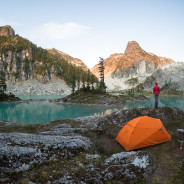
Bottom Line: A versatile, innovative and aesthethic tent that is light weight while still holding onto all the features you’d expect in a true 2-person, 4 season tent that will see you through the heat of Summer into the depths of a snowy Winter. First Impressions and Observations: As soon as I held the Nemo Kunai 2P tent in my hands my first thought was: “Yes! A tent that finally comes in a truly usable stuff sack”. I’m not going to lie, the stuff sacks that come with most tents usual disappoint me. Most times they are nothing more than a basic sack with a draw string to close them at the top. Nemo has provided, as standard, with the Kunai 2P tent a stuff sack that is not only waterproof, but allows for airspace to be compressed out and it has a glow in the dark map of popular constellations on the inside! Tent manufacturers take note, this is how you impress a camper before they’ve even had a chance to actually look at the tent. The Kunai 2P tent and pole set Awesome compression stuff sack “Recharge with your headlamp”. Neat! Pitching the Kunai 2P Mountaineering tent is extremely straightforward also. It has two main poles that cross over the main tent body and then an additional brow pole to increase head room at the tent door and provide extra height to the vestibule. The main tent body pitched The front brow pole on the tent Swivel Hub on the Kunai 2P Tent Fully sealed up inside this tent gets warm fast! I can see how the double walled design will make this an amazing tent in Winter. But what about Summer? The venting system to make this a true 4-Season tent, and not just a Winter Tent, is quite remarkable and innovative. Venting on the entrance door Looking down the end of the tent Struts that hold a part of the door open Door vent with strut from the inside Vents have been installed at both ends of the tent, but more than that, struts have been installed into the fly to allow for the vents to be held open, increasing airflow. Awesome! Inside the tent there are pockets where you’d need them. A pocket on each side of the tent down low for a phone or wallet and overhead pockets for a headlamp. If you turn your headlamp on and place it in the overhead pocket it diffuses light around the tent. Side stash pocket Top pocket in the Kunai 2P Tent Space is at a premium inside the tent, but this is understandable as it’s meant as a mountaineering tent which will need to fit onto small ledges or will need to have a level platform chopped out of the snow and ice for it. A bigger footprint is not better up high in the mountains. Still, there is space at the foot of the tent for extra clothes and other essentials. The vestibule is roomy enough to store backpacks and sharp objects like ice axes as well as your hiking boots. Overall I was impressed with the Kunai 2P Mountaineering tent. The burly design inspires confidence when heading out in even the gnarliest of conditions. The attention to detail is truly incredible and the weight of 2.1kgs...
read moreThe Wonderland Valley Resort and Campground
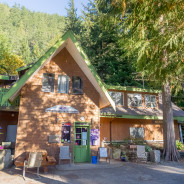
Bottom Line: The Wonderland Valley Resort and Campground is a hidden gem for staying overnight in Squamish. Situated in an amazing location in the trees, with moss covered cliffs beside it, a babbling brook running through it and a secret viewpoint to watch sunsets on the impressive Stawamus Chief and beyond. The amenities are generous with fast Wifi (tested at 50Mb/s download during our stay), laundry facilities onsite for washing and drying and clean washrooms. We found the showers always had hot water and the pressure was always high. Loved it! First Impressions: Hidden in the forest just north of Squamish near Brackendale is the Wonderland Valley Resort and Campground. As you leave Squamish heading towards Whistler it is on the right at the intersection of Highway 99 with Depot Road East. This intersection is known locally as “The Yellow House Intersection” due to the large yellow house on the right as you drive north. Turn right here and head along the road into the forest, following the wonderfully designed purple and gold signs for Wonderland. As we entered the grounds for the first time we realized that this was not an RV park like any other we’d seen before. It was colourful, vibrant and charming. We checked in and went about getting our trailer, an old Boler camper, hooked up to power and water. We picked a spot beside a flowing creek for those soothing babbling sounds that would lull us to sleep every night. The trees above rustled with the wind casting speckled sunshine across the forest floor. This place was indeed Wonderland. The Wonderland name originates from this Resorts location next to Alice Lake, referring to the story of “Alice in Wonderland”. Alice Lake can be reached from the grounds on foot or mountain bike by using the “Wonderland” trail. A lot of the trails nearby have been given “Alice in Wonderland” themed names also. Even though we were only a few minutes drive from Squamish we felt like we were out in the wild. Wonderland Valley Resort and Campground has done an excellent job of preserving the natural experience to their grounds. In the evenings be sure to check out the Water Tower Viewpoint that offers amazing views of the sun setting over the Stawamus Chief mountain and the town of Squamish. It will take your breathe away. More than just a Campground: Not only can you camp out in a tent here, they also have service for both 15 amp and 30 amp Campers and RV’s with water, electrical and sewer hook ups as well as a Hotel with views out above the trees into the Tantalus Range. Click left and right on your keyboard to cycle through the images below of what you can expect from the warm and cozy Hotel rooms at the Wonderland Valley Resort and Campground. Surprising Amenities: Generally with camping we expect to “rough it” even at drive in Campgrounds, which is why the amenities that offered at Wonderland Valley Resort and Campground will surprise you. For one the WiFi, for the entire duration of our visit (1 Month) was amazing. Super fast upload and download speeds for streaming Netflix or working from our home away from home under the trees. We tested it using speedtest.net and results of 50Mb/s...
read more10 Reasons To Run Squamish 50 Every Year
This year made my 3rd year in a row running a distance in the Squamish 50 series. My love affair with the Squamish 50 began when I signed up for my first trail race, the 50km option, in 2013. The following year would see me attempting and finishing my first 50 miler and this year I chose the 50km option once again. What exactly is it about this race that keeps me coming back for more? Here are 10 of my favourite things about this race and reasons why you should put this race on your yearly schedule. 1.Finish line hugs. The race director, Gary Robbins, actually waits at the finish line both days to congratulate every single runner that comes across the finish line with a hug (he might even let you tousle that glorious beard, if that’s your kind of thing). Don’t be surprised either if random runners are coming up to you to hug you, high five and give you a job well done. There is just a lot of love going around at the finish line of this race! 2. Singletrack trail for miles upon miles. The course has been designed to contain at least 85% beautiful forest singletrack.This is trail running at it’s best! 3. Running in a rainforest. That’s right, this isn’t just any forest we are running through. This is Pacific Northwest Rain Forest which means there are giant cedar and hemlock trees, ferns filling the forest floor and moss a colour of green you wouldn’t believe. It’s vibrant, it’s humid and the air is filled with the scent of wet earth and vegetation. 4. Bouncing across wooden mountain bike bridges. Did you know that almost all of the trails in Squamish have generously been created by the SORCA (Squamish Off Road Cycling Association) mountain biking community and do you know what mountain bikers love? Wooden bridges! Funny because trail runners love them too. The short ones curve steeply requiring you to pay extra attention to your footing and the longer ones bounce with each step which means the bridge rises up to meet your foot at each placement. 5. Salty potatoes. This might not sound like a big deal or even that tasty. But run 23 km (14 miles), 50 km (31 miles) or 80 km (50 miles) on a warm August day and tell me that the starchy, salty, melt in your mouth potato doesn’t hit the right spot. 6. High fives everywhere. I like to think that trail runners are a different breed of runner. They are friendlier, more excitable and more willing to have a chat on the trail. So be prepared for a lot of cheering while out on the course and get your hands prepped for a gratuitous amount of high fiving! 7. Hurts so good. The course is tough, it’s technical and it makes you earn every single step to the finish line, but I promise you that you will love it! 8. You can never get lost. Well ok technically you could get lost, but only if you decided to run with your eyes closed! This course has a 60 second flag rule, meaning that whether you are walking or running you will see a course marker every 60 seconds. This leaves you to focus...
read morePrepare for the Salomon Valley to Peak Race in Whistler
On September 5th, 2015, British Columbia, Canada is going be introduced to a trail race that’s a completely different kind of animal. It’s famously said “the Summit is only the half-way point“, but what if it didn’t have to be? What if the summit was the end? Salomon has created this in Whistler with the Salomon Valley to Peak trail running race, a 23km/14.3M long run that gains over 1609m’s/5280ft from the Valley floor to the very top of Whistler Peak. To put that elevation another way, it’s almost exactly like climbing a vertical mile into the sky. This is going to be intense and epic! Here’s some of my tips on how to prepare yourself for a feat like this. The Secret to Running up Mountains What’s the secret to training for an uphill race like Salomon Valley to Peak? The secret is that there is no secret at all. You just need to put in the miles, get breathless and learn to love feeling a little uncomfortable. There are a few top tips though that can definitely help you to get the most out of race day and really have fun out there. Run Hills Let’s be honest, running uphill is hard work, but it is what makes you a stronger runner. Think of running uphill in terms of perceived effort rather than pace. What this means is that you won’t be trying to run up the hill at the same pace that you can run on flat trail, instead slow your pace down to a point that allows you continue running at a regulated heart rate. If you push uphill too fast your heart rate will spike, that’s just something you won’t be able to maintain for long. Learn to power hike/walk Yes you read that right, walking is definitely allowed! This isn’t your everyday walking pace though. This is a hiking pace with a bit of oomph behind it. It’s all about power and stride. If the hill is too steep or sustained for you to continue running, oftentimes it is more efficient to power up those hills in hiking mode. When you are out training on your long hills, throw some power hiking into your routine with emphasis on the power. Pump your arms, straighten your back and take short steps to ensure you are using the big glute muscles to propel you up the hill. Run Technical Trail Trail running often involves technical terrain, roots, rocks and twisty trail, and the Salomon Valley to Peak race is no different. Be prepared for this type of trail by training on it. Practice running up and down as they both require different muscle groups. The small stabilizing muscles in your ankles need to be prepped for this kind of terrain. Train on uneven terrain and you will be sure that your muscles will be ready to keep you upright on race day. Smile & Have Fun If you’re not smiling and having fun you’re doing something wrong. You signed up for this race to have some fun, challenge yourself and reach a goal. When you are out there training never forget how much fun running is, flying downhill or cresting the top of a long hill that gives you rewarding views, this is what it’s all...
read moreExploring the Whistler Via Ferrata
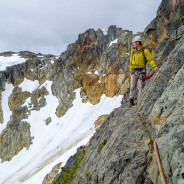
If you haven’t already, check out our previous post about Via Ferratas and our experience on the Squamish Via Ferrata at the Sea to Sky Gondola. You can read that here: An Adventure on the Squamish Via Ferrata Well, after our morning out with the Mountain Skills Academy on the Squamish Via Ferrata we were psyched to check out the Whistler Via Ferrata next. The Whistler Via Ferrata was one of the first of it’s kind in Canada and we were told that it was a few grades harder than the newer one recently opened in Squamish. Fresh off our experience in Squamish we were excited to see for ourselves what it was like! It’s longer than the Squamish Via Ferrata being a 4 hour return trip from the Roundhouse on Whistler Mountain. Myself and Spring met up with our Guide and group at the base of the gondola in Whistler. From there we took the gondola up and got to know each other on the scenic ride up the mountain. At the top we went to a little cabin near the Roundhouse to get our harnesses, helmets and lanyards. Coming straight off our Squamish trip we felt like seasoned pros with the equipment. Weather couldn’t slow us down. We headed out promptly and got the day underway. Clouds were building overhead and weather looked to be rolling in but it didn’t slow us down. Right away we got that big mountain feel. From the Roundhouse you will be starting above the trees in the Alpine. We were surrounded by rock, ice and snow. After hiking for a bit towards Whistler Mountain we gained the base of our route and the fun of climbing the “Iron Road” began. We clipped into the security of the metal cable running along the length of the route and started moving upwards steadily. We could definitely feel that this Via Ferrata was different to the Squamish one. The rungs were further apart and in places you needed to hold onto rock to move upwards. It was varied and interesting but never too hard. A girl in our group had never done anything remotely like this before and she found it a lot of fun. We always had the reassurance that we were protected as we were clipped into the metal cable. Bringing back the High 5 on Whistler Mountain! The route had an awesome mountaineering feel. We traversed ledges, moved around blocky features, ascended steep cliffs, all while working our way towards the summit. If you want that feeling like you are aiming for an objective in the mountains and working to achieve it then this will definitely be for you. After a few hours, we topped out and everyone High Fived and smiled. There was a real sense of accomplishment. We had climbed an actual mountain and now had the reward of looking at the many peaks and mountain ranges around us. Our day wasn’t over yet, as any Mountaineer knows, we still had to get down. To get back to our starting point our guide found a slope with snow on it and we slid down on our bums making a fast and fun retreat. If you want that inner child in you to come out then this will do it for...
read more


